Invisible Yet Indispensable: Issues and Challenges Faced by Female Street Vendors in Aligarh, Uttar Pradesh
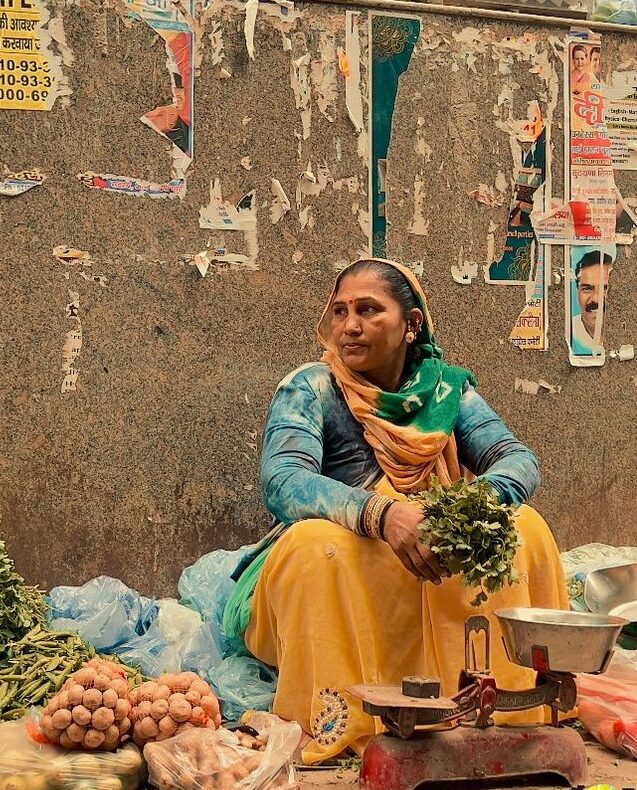
Picture credit to: Devansh Kalra and Aayushmaan Sain
Examining resilience within the informal economy
Female street vendors in Aligarh represent a vital yet underexplored segment whose contributions sustain households and urban life. Their experiences highlight structural challenges that call for integrated economic, social, and policy interventions to advance inclusive development, gender equity, and social justice.
For many women, street vending is a choice shaped by necessity, not opportunity. Low income, high responsibility—this is the reality of female street vendors. rrrrtrPolicy exists, but access remains a distant reality for many women.” -Datum Works
Street vending is one of the oldest and most accessible livelihoods, especially for individuals who lack formal education and employment opportunities. It not only generates income for the unemployed but also plays a crucial role in providing affordable goods and services to a large section of society. In India, millions of street vendors contribute to the urban economy by offering essential commodities at reasonable prices, thereby strengthening traditional trading systems. Despite this significant contribution, street vending remains largely unrecognised and undervalued, as vendors are often perceived as encroachers in public spaces rather than contributors to economic development. This occupation falls under the unorganised sector, which includes small, unregistered enterprises operating with limited resources and minimal legal protection. As a result, workers in this sector, particularly women, remain invisible in official statistics and policy frameworks.
Female street vendors represent a highly vulnerable yet essential segment of this informal economy. Economic necessity, family responsibilities, and the absence of stable income sources often drive their participation. These women not only contribute financially to their households but also manage multiple roles as caregivers, homemakers, and income earners. Their involvement in street vending reflects a shift in traditional gender roles, as they step beyond domestic boundaries to support their families. However, their journey into this profession is often shaped by socio-economic hardships such as poverty, lack of education, domestic instability, and in some cases, the loss of a primary breadwinner. For many women, street vending becomes a dignified alternative to dependency or an exploitative means of survival, enabling them to sustain their families with self-respect.
We meet some female street vendors in Aligarh district, Uttar Pradesh, with particular attention to women from marginalized Muslim communities. It examines their lived experiences, socio-economic conditions, and the challenges they face in their daily lives. The research adopts a mixed-method approach, combining structured interviews with both quantitative and qualitative elements to gain a comprehensive understanding of their situation. The study specifically considers four categories of vendors selling vegetables, garments, spices, and cosmetics due to their visibility and prevalence in local markets. Findings indicate that most women engaged in street vending come from economically disadvantaged backgrounds, with limited access to education and financial resources. Their average daily income remains low, often ranging between ₹200 and ₹250, which is insufficient to meet the growing needs of their families, including education, healthcare, and other essential expenses.
The challenges faced by female street vendors are multidimensional and deeply rooted in structural inequalities. Economic instability is one of the most pressing issues, as their income is irregular and highly dependent on daily sales. Large family sizes and limited resources further increase financial pressure, forcing women to work long hours under difficult conditions. The lack of basic infrastructure such as they don’t have toilets nearby, clean drinking water, sanitation facilities, and secure vending spaces, significantly affects their health and productivity. Many women are compelled to leave their work multiple times a day to access basic amenities, which disrupts their business and reduces their earnings. In addition, the absence of storage facilities exposes their goods to environmental damage, resulting in further financial loss.
Legal insecurity is another major concern, as many female street vendors operate without formal licenses. This makes them vulnerable to eviction, fines, and harassment by local authorities. Frequent raids, confiscation of goods, and demands for bribes create an atmosphere of fear and uncertainty, making it difficult for them to sustain their livelihoods. Gender-based challenges further intensify their vulnerability, as women often face sexual harassment, eve-teasing, and social stigma. Cultural and societal norms also restrict their mobility and limit their opportunities for growth, reinforcing their marginalization. These factors not only affect their economic stability but also have a profound impact on their mental health, leading to stress, anxiety, and burnout.
Health-related issues are also prevalent among female street vendors, as they work in physically demanding environments with limited access to healthcare services. Many women tend to ignore health problems due to the fear of losing daily income, which worsens their condition over time. Poor nutrition, long working hours, and exposure to harsh weather conditions further contribute to their physical and mental exhaustion. Despite these challenges, women demonstrate remarkable resilience and adaptability, often relying on informal support systems such as self-help groups and community networks for financial and emotional assistance. These networks play a crucial role in helping them cope with everyday difficulties and maintain a sense of solidarity.
Although various policies and legal frameworks have been introduced to support street vendors, including the National Policy on Urban Street Vendors and the Street Vendors Act, their implementation remains inconsistent. Many women are still unable to access licenses, social security benefits, and institutional support due to bureaucratic barriers and lack of awareness. The gap between policy and practice continues to limit the effectiveness of these initiatives, particularly for marginalized women. Therefore, there is an urgent need for gender-sensitive interventions that address the specific needs of female street vendors, including access to infrastructure, financial services, healthcare, and legal protection.
In conclusion, female street vendors in Aligarh are not only contributors to the informal economy but also symbols of resilience and survival. Their work sustains families, supports communities, and contributes to urban life, yet remains largely unrecognized and unsupported. Addressing their challenges requires a comprehensive approach that integrates economic, social, and policy-level interventions. Empowering female street vendors is essential for achieving inclusive development, gender equality, and social justice, as their progress is closely linked to the overall well-being of society.