

Citizenship and Fear: A Ground Reality

Written By: Dr Arish Qamar
Research cannot always be impersonal, especially when you conduct one against ground realities. You cannot often alienate yourself from the subjective analysis that underscores the scientific numbers that define research.
Of late, I travelled to Jodhpur— the blue city, as people endearingly call it— to survey some Hindu families, who dispossessed from their country, fled to India in hope of a new home amongst a people of their own creed. And I couldn’t help but ask myself in the first place, “Why did they flee Pakistan? Did they not belong there?” But belonging is not as unifaceted as most people, who have not longed for a their belonging, assume it is. There are many dimensions to it: from ethical to psychological, and from social to political.
And I wish to speak briefly on the last aspect.
“Why did they flee Pakistan? Did they not belong there?” the problem?
Of late, I travelled to Jodhpur— the blue city, as people endearingly call it— to survey some Hindu families, who dispossessed from their country, fled to India in hope of a new home amongst a people of their own creed. And I couldn’t help but ask myself in the first place, “Why did they flee Pakistan? Did they not belong there?” But belonging is not as unifaceted as most people, who have not longed for a their belonging, assume it is. There are many dimensions to it: from ethical to psychological, and from social to political.
And I wish to speak briefly on the last aspect.
From a political perspective, how do we define belongingness, and why does it have to be political at all?
To answer the first part of the question, we have limited tools to define one’s belonging to a country but one’s citizenship which we take for granted as some bureaucratic documentation unnecessarily imposed upon us by the state machinery. But we seldom realise that beyond documents or political franchise, this documental citizenship is also about belongingness. It not merely connects people to their country but also legitimatises their share in the political sphere, their culture and them being a respectable community, important equally as other ones in the country. This secures them their ‘I’ in identity, for now they can be a part of something, they have an association to belong to. This association, and the belonging thereof, secures them their lives, rights and a future that holds opportunities rather than insecurities.
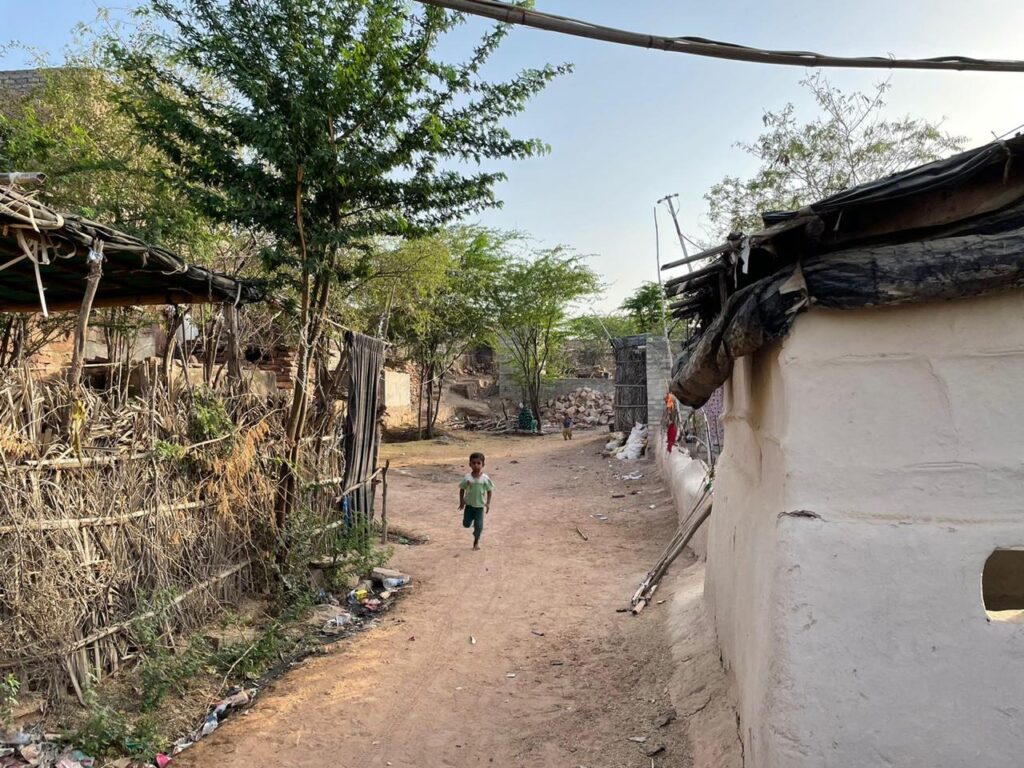
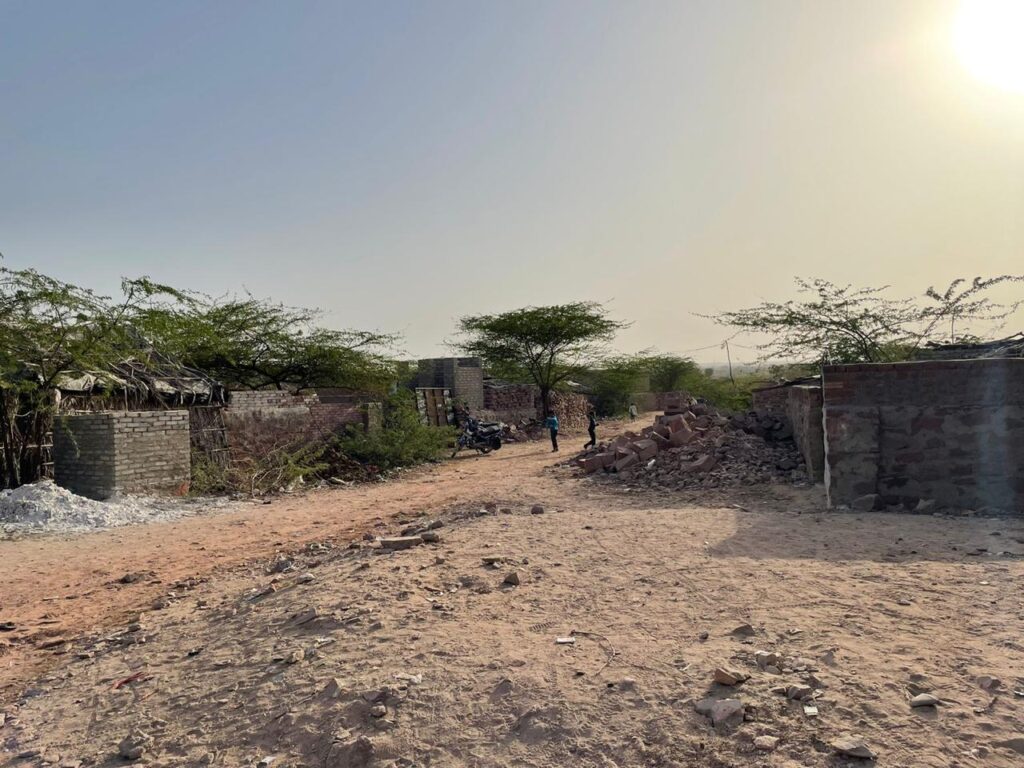
Across the narrow alleys, beyond the clustered, blue houses, some people are forgotten against the stone walls that carry stories of the past. Some humans, or call them vagrants if you may, respectable just like the rest of us, are shadowed by the immersive beauty, vibrant culture and rich history of the city. Scattered in pockets in different parts of the city, many Hindu refugee families live in refugee camps. They came from Pakistan to India in the hope for a safer and more respectable life. This movement has been happening since the time of the Partition of India, when people chose their country based on religion or survival. Many things have changed since the but the life in refugee camps.
I, during the research, visited one such place called Banar Camp housing many a Hindu refugees in inhumane conditions. The experience was very different for me, and honestly, heavy, for I too have a heart that feels. The camp was not easy to find, after all who cares where the undesired ones dwell? While searching for it striding through the narrow lanes, I came across met an old man idling outside his small house. I deemed it prudent to ask him for directions, “Bhaiya, where is Banar Camp?”
Instead of answering, he took out a small pouch from his pocket and showed me his identity documents— A laminated Aadhaar Card and a voter ID. For a moment, I was naturally perplexed as to why he would do such a thing when I had only asked for directions.
There was a quiet fear in his eyes. He did not say anything directly, but it was easily palpable. Maybe, he was worried that I might see him as an outsider, an intruder, an undesirable, an alien consumer of resources.
When I finally, after sifting through the lanes, entered the camp and spoke to people dwelling there, I observed with basic use of reason that the monetary and socio-communal living conditions of locals and the refugees were not very different: both were struggling to build a better life, facing similar challenges, both victims of the socio-economic realities that pervade the nation; the only major difference being the the feeling of belongingness. The realisation struck me: the idling old man was not just showing me the way… he was trying to prove to me that he is a legitimate Indian, not an alien seeking refuge there.
It unfolded that the local people had a sense of peace and security stemming from the acknowledgement of them belonging here— acknowledgement that comes on the laminated piece of paper that he pulled from his pocket. That paper is the grant of citizenship that spares them from the fear of being dispossessed. They need not to prove their belonging time and again.
But the refugees were ingrained with a sense of uncertainty, a majority of them uncertain about their belonging here. This was further heightened by fear. There was some perpetual fear that governed the camp: fear of the future, fear of being questioned, fear of arrest, and most importantly, the fear of being dispossessed anew. Ignorance breeds fear, and fear breeds violence. Because of fear, they often miss out on some basic facilities, and if they dare to access those facilities, they have to keep proving their belongingness again and again.
There was fear on both sides of identity. Some were afraid their identity would be exposed, while others were afraid they would not be able to prove it at all.
As I was leaving the camp, I thought of that old man, and the visuals of him feeling the need to show his identity without even being asked still are quite vivid and haunting. It made me understand that identity is not just a card safely laminated. It is a feeling, indeed, but, it also is a kind of power, or in other words an empowerment that shapes how safe a person feels, how they are treated, and where they stand in society in terms of rights and dignity. Not all humans are equal, not politically at least.
For most of us, identity is something we never question because we already have it from our very birth, but for those who live without that certainty, identity becomes everything, belonging becomes a longing.
Banar Camp taught me that “money or a better life is not the desire of all, for some a life without fear is everything: the need, the want, the desire. A life where they can truly feel that they belong” – Dr Arish Qamar

Leave a Reply